
Sex and the City: From the Arcade to the Corner
A talk with Angelica Stathopoulos; philosopher, writer and translator
20th century European literature is filled with masculine figures that loiter, stroll, and ruminate on their everyday existence in an increasingly commodified world. The flaneur digests the city through writing, and his accounts also come to nourish philosophical conceptions of subjectivity, work, boredom, and writing. The experience of masculine mundanity becomes the model for the experience of mundanity as such.
Historical accounts of city life, of public living, rarely include the perspective of the flaneuse. Women are predictably tied to the home, whereas masculine voices populate our understanding of the public. If the arcade, as Walter Benjamin noted, is the home of the flaneur, then the corner—the intersection—is the marked location for the flaneuse. It is at the street corner that the flaneuse lives her life and/or earns her living. The corner offers a spatial frame, but a methodological one too. Intersectionality, as coined by Kimberlé Crenshaw, is an analytic tool used to consider how different systems of oppression intersect. By aligning Crenshaw’s metaphor with its material reference, this session centers on the corner as a privileged site for acknowledging the complexity and diversity of feminine existence. Listening to neglected stories about everyday public life lived in the feminine, the session pays attention to their gender variance and racial echoes.
Queer history, this talk suggests, is written not by way of a direct and clear vision, but from the point of view of the corner of one’s eye, by way of a slanted gaze, through glimpses, looks. This perspective echoes José Esteban Muñoz’ conception of potentiality, which provides an alternative vision located outside of straight time and space, as well as Anne Carson’s understanding of corners as performing a choreography of exposure/shelter. Beyond straight passages of space and time, this talk turns to the corner for its bended, awkward, queer potential in rewriting herstory. Tending to stories told by feminine drifters in 20th century to contemporary literature, we get to know the potentials and difficulties of the corner of the city by way of a fem(me)inine historiography.
Bio
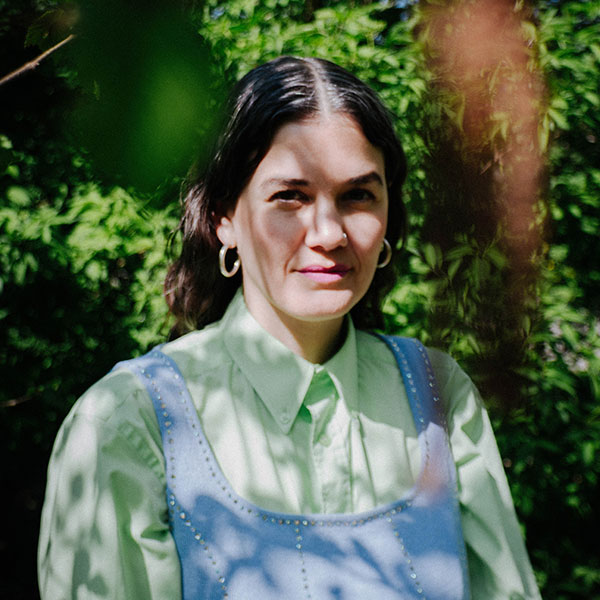 Angelica Stathopoulos is a philosopher with a passion for passive styles of life, including laziness, boredom, and sleep, and how such experiences are felt and lived by minoritarian beings. They hold a PhD in philosophy from The New School for Social Research and they have held fellowships from The Onassis Foundation for Ancient Greek Studies and the ICI Berlin Institute for Cultural Inquiry. Their work is situated at the intersection of philosophy, queer theory, and literature. Recent publications include “From Mr. Big to mr. small: Seven Interludes on Impotence” (Lambda Nordica, 2026) and “On the Boredom of Whoredom: Re-Writing the Politics of Sex Work Through Passivity and Femininity” (The Journal of Lesbian Studies, 2023). They also work as an editor of the special issue "Lesbians, Sex Work, Resistance" of The Journal of Lesbian Studies, and as the translator of Luce Irigaray’s Speculum de l’autre femme into Swedish.
Registration
Please sign up to intersect@ku.dk
Map of South Campus
View directions.
View on map of the Faculty of Humanities - South Campus.
View map of South Campus (pdf).